
Seedance is ByteDance’s video model. Version 2.5 makes clips up to 30 seconds with their own cuts, dialogue and sound (the Seedance 2.5 prompt guide on BytePlus, ByteDance’s cloud), which changes how to work with it. Prompting one shot at a time and then fighting to make the clips match is slow and loses the performance between them. The better unit is the scene: one request that holds the setup, the response and the payoff, with every cut written in. Each scene below is a single Seedance 2.5 generation from Bald Rhino’s agent. The track under the picture is its shots, each as long as the prompt asked, and the prompt beside it marks the shot playing.
Nature documentary · 4 shots · 2 references
Shot 1 · 0:00
A 24-second photorealistic nature-documentary scene in a misty Late Cretaceous forest. @Image 1 sets the place, framing and light: a low view at a small child's eye height, hidden behind big fern fronds, a small muddy puddle in the foreground, a path between tall conifer trunks beyond. @Image 2 sets the Tyrannosaurus rex's exact appearance: massive skull, lips covering most of the teeth, tiny two-fingered arms, horizontal body balanced by a long thick tail, dark brown and olive skin. Shot 1, 0-8s: static low view as in @Image 1. Quiet forest. A deep distant THUD: concentric ripples spread across the puddle surface. A second, stronger THUD: bigger ripples, the ferns tremble. Shot 2, 8-15s: the T. rex steps into view from the misty path far beyond the puddle, walking slowly between the trunks. It stops, lifts its head and sniffs the air. Shot 3, 15-19s: it raises its head toward the sky, turned to the side and away from the camera, and lets out a deep powerful roar; small birds flutter out of the trees. Shot 4, 19-24s: it turns and walks away deeper into the mist; its footsteps fade and the puddle slowly settles. Exciting but safe for a young child: it never notices or approaches the camera, no attack, no chasing, no blood. Sound: heavy footstep thuds, water rippling, a deep rumbling roar, wings fluttering, then quiet forest ambience. No music, no speech, no text, no people.
-
Nature documentary · 4 shots · 2 references
Late Cretaceous
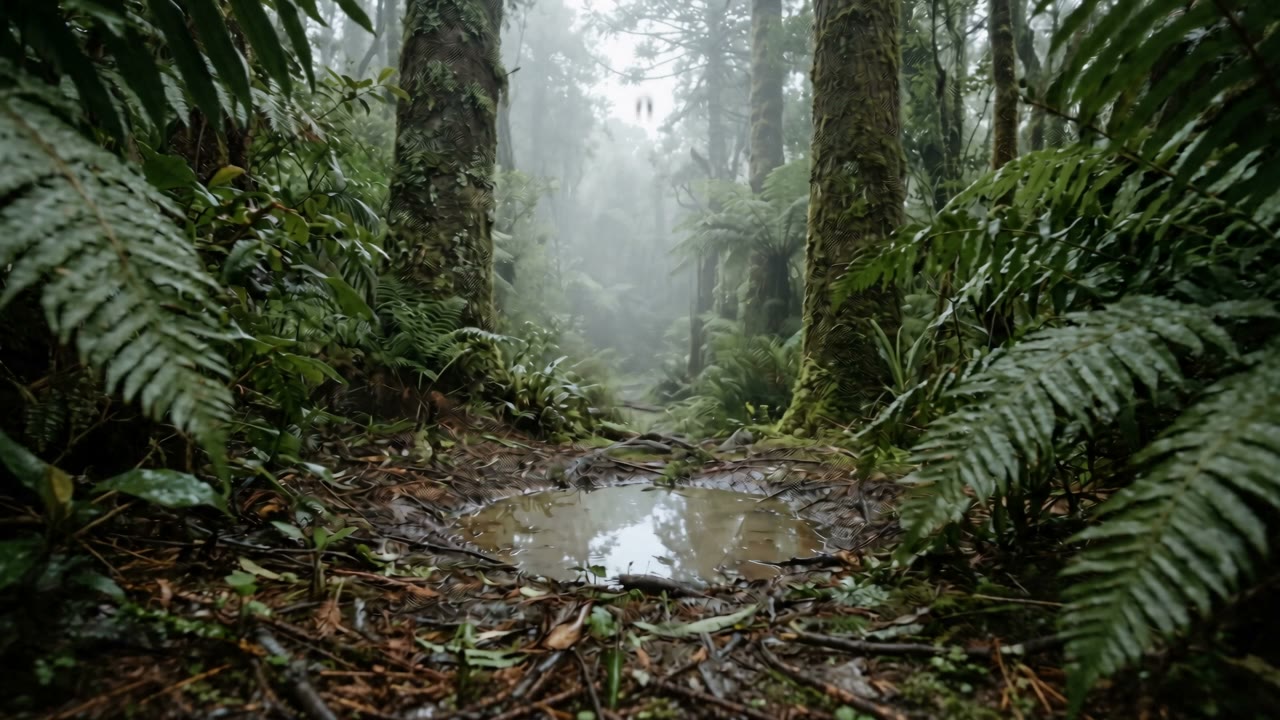
A 24-second photorealistic nature-documentary scene in a misty Late Cretaceous forest. @Image 1 sets the place, framing and light: a low view at a small child's eye height, hidden behind big fern fronds, a small muddy puddle in the foreground, a path between tall conifer trunks beyond. @Image 2 sets the Tyrannosaurus rex's exact appearance: massive skull, lips covering most of the teeth, tiny two-fingered arms, horizontal body balanced by a long thick tail, dark brown and olive skin. Shot 1, 0-8s: static low view as in @Image 1. Quiet forest. A deep distant THUD: concentric ripples spread across the puddle surface. A second, stronger THUD: bigger ripples, the ferns tremble. Shot 2, 8-15s: the T. rex steps into view from the misty path far beyond the puddle, walking slowly between the trunks. It stops, lifts its head and sniffs the air. Shot 3, 15-19s: it raises its head toward the sky, turned to the side and away from the camera, and lets out a deep powerful roar; small birds flutter out of the trees. Shot 4, 19-24s: it turns and walks away deeper into the mist; its footsteps fade and the puddle slowly settles. Exciting but safe for a young child: it never notices or approaches the camera, no attack, no chasing, no blood. Sound: heavy footstep thuds, water rippling, a deep rumbling roar, wings fluttering, then quiet forest ambience. No music, no speech, no text, no people.
-
Animated comedy · 8 shots · 1 reference
The leaking greenhouse
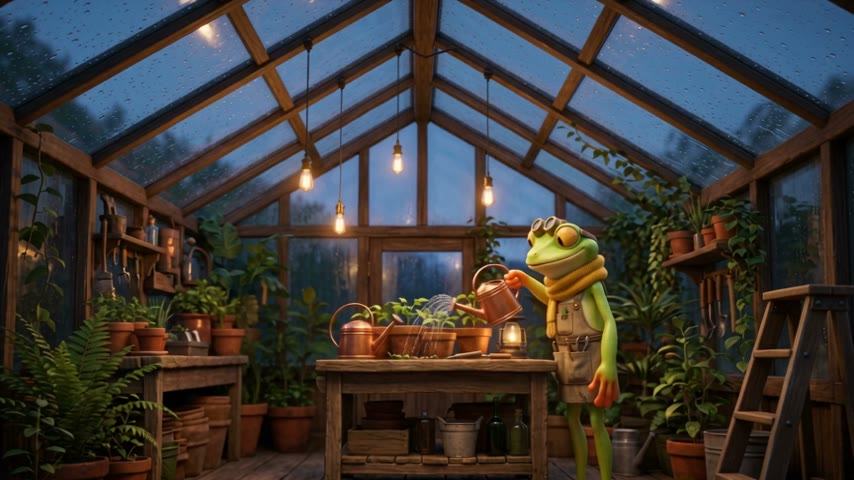
Audio policy (all shots): the two characters' spoken lines, the marked sound effects and steady rain on the glass roof, plus the one light music theme marked below. No subtitles. A continuous comedy scene in one location, a rainy greenhouse workshop at dusk, in eight shots, 3D animated feature-film style. @Image 1 is the character-and-location sheet: take the two characters' designs and the greenhouse workshop from it, and take nothing else from it. On the left of @Image 1, Bolt: a small round teal tin robot with one large round cyan eye-lens, two thin antennae with red bulb tips, stubby clamp hands, rolling on a single black rubber wheel. On the right of @Image 1, Fern: a tall slender lime-green tree frog standing upright, with big golden eyes, a mustard-yellow knitted scarf, a canvas work apron and brass goggles pushed up on her forehead. The workshop: a peaked glass roof, a long wooden workbench with a row of seedlings in clay pots, warm hanging bulbs, a wooden stepladder on the right, cool blue dusk light through the glass and warm amber light inside. Music: (a light, playful pizzicato strings theme, steady medium tempo, quiet under the voices, 0-30s). Shot 1, 0-3s: wide shot of the workshop, static camera. Fern, the tall green frog in the yellow scarf, stands at the workbench on the right, watering the seedlings. A drop of water falls from a crack in the glass roof onto a seedling. <rain patters on the glass roof> <a single drip taps a clay pot> Shot 2, 3-6s: medium close-up of Fern, slight low angle. She looks up at the roof, eyes wide, and calls out. Fern, the tall green frog (a warm, quick, mid-range female voice): "Bolt! The roof is leaking on my seedlings!" Shot 3, 6-10s: medium shot, the camera tracking left to right. Bolt, the small teal robot with the cyan eye, rolls in fast from the left carrying a dented tin bucket over his head and sets it under the drip. Bolt, the small teal robot (a bright, small, slightly tinny boyish voice): "Bucket deployed!" <wheel squeak> <a drip plinks into the metal bucket> Shot 4, 10-13s: the same medium shot continues without a cut: Bolt, beside the bucket, looks up as a second and then a third drip start falling beside the first onto the bench. <drips tapping wood> Shot 5, 13-17s: two-shot at bench height, Bolt on the left and Fern on the right. Bolt's eye-lens flicks between the three drips; he holds up his one bucket. Bolt, the small teal robot (a bright, small, slightly tinny boyish voice): "Three leaks. One bucket." Fern grabs a roll of silver tape from the bench. Shot 6, 17-20s: medium shot. Fern climbs the wooden stepladder on the right, tape in hand, while Bolt rolls over and grips the ladder's legs with both clamp hands. Fern, the tall green frog (a warm, quick, mid-range female voice): "Hold the ladder steady!" <ladder creaks> Shot 7, 20-25s: the ladder shot continues without a cut, then the camera tilts up to a low angle past Bolt's antennae. At the top of the ladder, Fern tears a strip of tape and presses it over the crack; the ladder wobbles and Bolt braces it, his wheel skidding. <tape tearing> <ladder rattles> Fern (warm female voice): "Got it!" Shot 8, 25-30s: close-up of Bolt, the small teal robot, looking up proudly. One last drop falls and lands right on his cyan eye-lens; his lens shutter blinks twice. Bolt, the small teal robot (a bright, small, slightly tinny boyish voice), deadpan: "Except this one." Fern, the frog above, laughs softly off-screen. <a drip taps metal> <soft rain continues> Keep the characters' designs, sizes and screen sides consistent in every shot: Bolt reaches about Fern's hip; Bolt on the left, Fern on the right unless a shot says otherwise. The light stays cool blue dusk outside and warm amber inside throughout. Sound: only the two voices, the marked effects, steady rain on the glass and the one pizzicato theme. No subtitles, no text or logos.
-
2D cartoon · 7 shots · no references
Diner slapstick
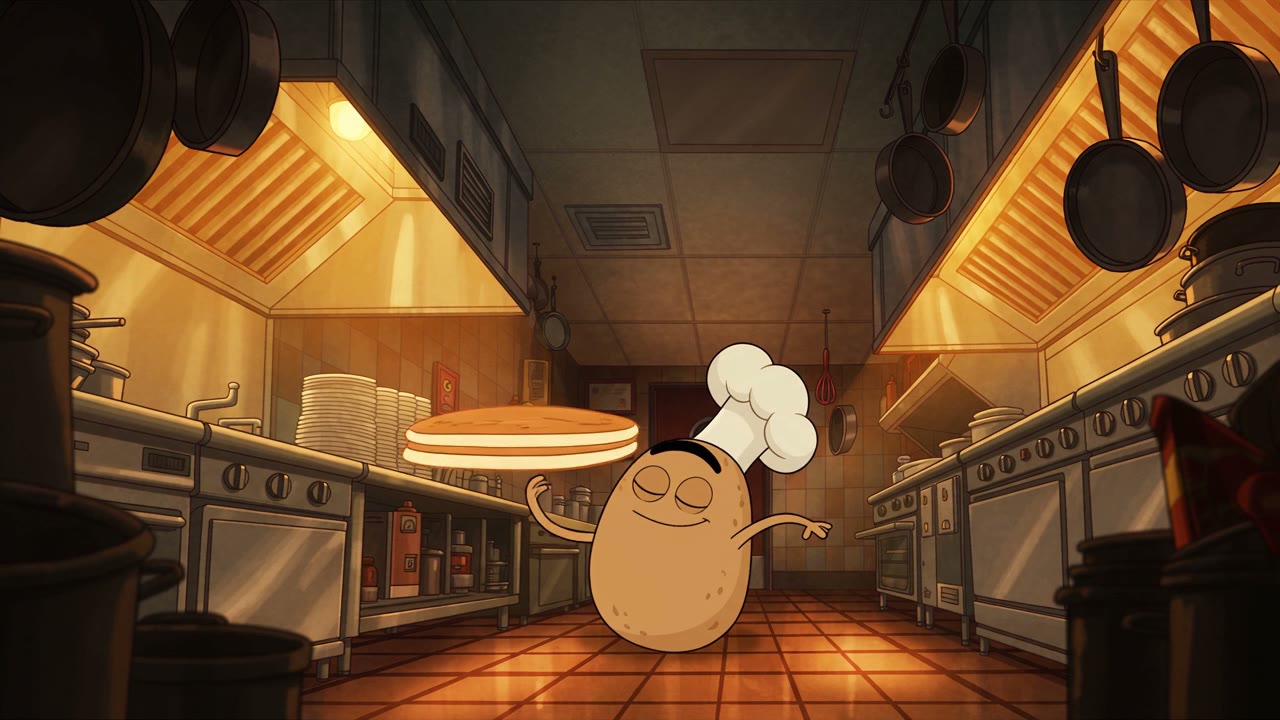
Bright, hyper-exaggerated 2D cartoon in the style of a zany Saturday-morning slapstick show: thick wobbly outlines, saturated colours, squash-and-stretch animation, rubbery limbs, huge bulging eyes. One location: a cramped, chaotic neon-lit diner kitchen with a pass-through window to the counter. Recurring cast: CHEF SPUD, a short round potato in a tall crooked chef hat with one giant unibrow and tiny arms; MORTIMER, a very tall noodle-limbed pelican waiter with a bow tie, whose beak holds a whole tray of plates; and GRUMBLE, a tiny furious lemon customer with a monocle and a huge moustache who sits on a stack of cushions at the counter. 0-4s: Shot 1, wide establishing shot of the kitchen. Chef Spud proudly flips a pancake; it sails up and sticks to the ceiling. Spud's eyes bulge to the size of dinner plates and his jaw drops to the floor with a cartoon boing. <boing, record scratch> Spud: "Nobody. Move." 4-8s: Shot 2, quick close-up on Grumble the lemon, veins popping, face turning from yellow to red, steam whistling out of his ears like a kettle. Grumble screams in a squeaky voice: "WHERE IS MY SOUP?!" His monocle pops out and spins in the air. 8-13s: Shot 3, medium shot. Mortimer the pelican stretches his neck like an accordion down the length of the kitchen, balancing a tower of twenty bowls on his beak, wobbling in a slow, panicked dance. His eyes go cross-eyed, pupils spiralling. <comic xylophone wobble> 13-18s: Shot 4, low angle whip-pan. Mortimer slips on the pancake batter, flips into a full slow-motion somersault, bowls spinning like planets around him, while Spud dives in a heroic pose and catches every bowl on his head, stacked in a perfect tower. Spud's face: smug, sweating, eyebrow wiggling. <cymbal crash> 18-23s: Shot 5, close-up on the counter window. Spud slides the tower over; Grumble peers into a bowl and finds it full of tiny googly-eyed noodles that wave at him. Grumble's face stretches comically long, eyes popping out on springs. The noodles chirp: "Hiiii!" 23-27s: Shot 6, wide shot. Grumble, trembling with fury, inhales hugely, swelling like a balloon, then burps a giant green bubble that floats up, engulfs Mortimer and Spud, and carries them out through the ceiling vent like a parade float. The ceiling pancake falls on Grumble's head like a hat. 27-30s: Shot 7, static medium shot on Grumble alone, pancake on his head, deadpan, one eyebrow raised, slowly sipping a tiny cup of tea. He says flatly: "...Needs salt." <single tiny sad trombone note> Hold the final frame. Lighting: warm, punchy diner neon, soft bounce. Camera: snappy cuts, exaggerated whip-pans, dramatic push-ins on faces. Sound: zany cartoon sound effects, boings, slide whistles, squeaky voices, no background music. Clean picture without subtitles, captions, text, logos or watermarks.
-
Drama · 3 shots in 8 seconds
Rain on the windscreen
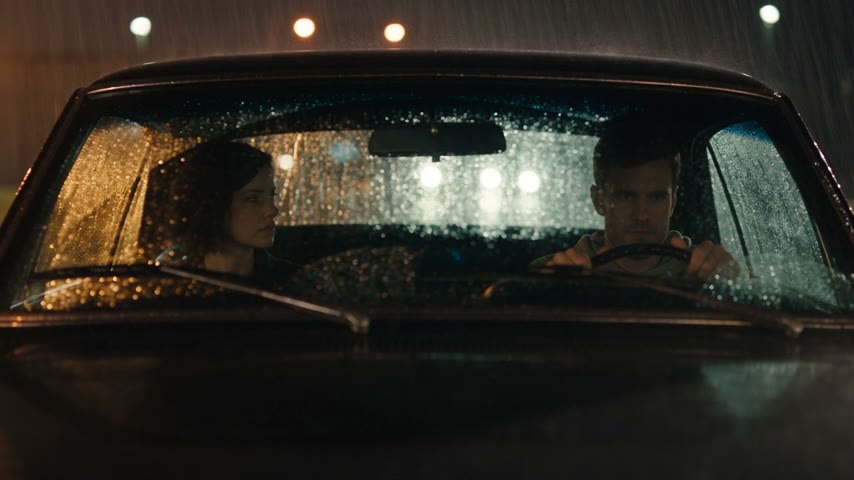
Three shots with cuts. Cinematic and realistic. Night, the warm glow of a dashboard. Inside a parked car in the rain. Shot 1 (0-2 s): a wide shot through the windscreen of a young couple in the front seats, rain running down the glass. Shot 2 (2-5 s): a close-up of the woman in the passenger seat, mid-twenties, short black hair; she says quietly: "We can't keep doing this." Shot 3 (5-8 s): a close-up of the man at the wheel, mid-twenties, stubble, grey hoodie; he grips the wheel and answers: "Then tell me what you want." Sound: rain on the roof and their voices; no music.
1. Write a scene, not a clip
Group connected action into scenes of up to about 30 seconds and write each as one request with its internal shots. Keep the setup, the response and the payoff of an event together. Every place where two separate generations meet is a place where the characters, the performance and the sound must be recovered, so fewer, longer requests hold together better. A short scene needs only the time it uses.
A scene can contain cuts. Say where the view changes and where the same shot continues; “one scene” does not mean one unbroken take. Make the end of each beat set up the next: in a chase, show what makes the characters turn before sending them back the other way. Stage the wide view, the close-up, the reverse angle and the reaction inside the same request, and give an important reaction enough time to choose its cut later. Splitting them into separate generations loses the performance: repeating the scene’s description and the character images does not carry what just happened.
2. Give every shot a view, an action, a voice and a sound
Open with the situation and the look, then the reference assignments, then the shots in order. For each shot, say the view, the action or reaction that matters, who speaks and exactly what they say, and the sound we should hear. Move the camera to reveal or follow something specific, and don’t pack several camera moves into one short interval.
Whole-second ranges organise the progression, but they are direction, not an edit clock: check where things actually happen before you time captions, music or a replacement voice to them. And end every prompt with “No text. No subtitles.”: the model can misspell lettering or invent subtitles, so titles and captions belong in the edit.
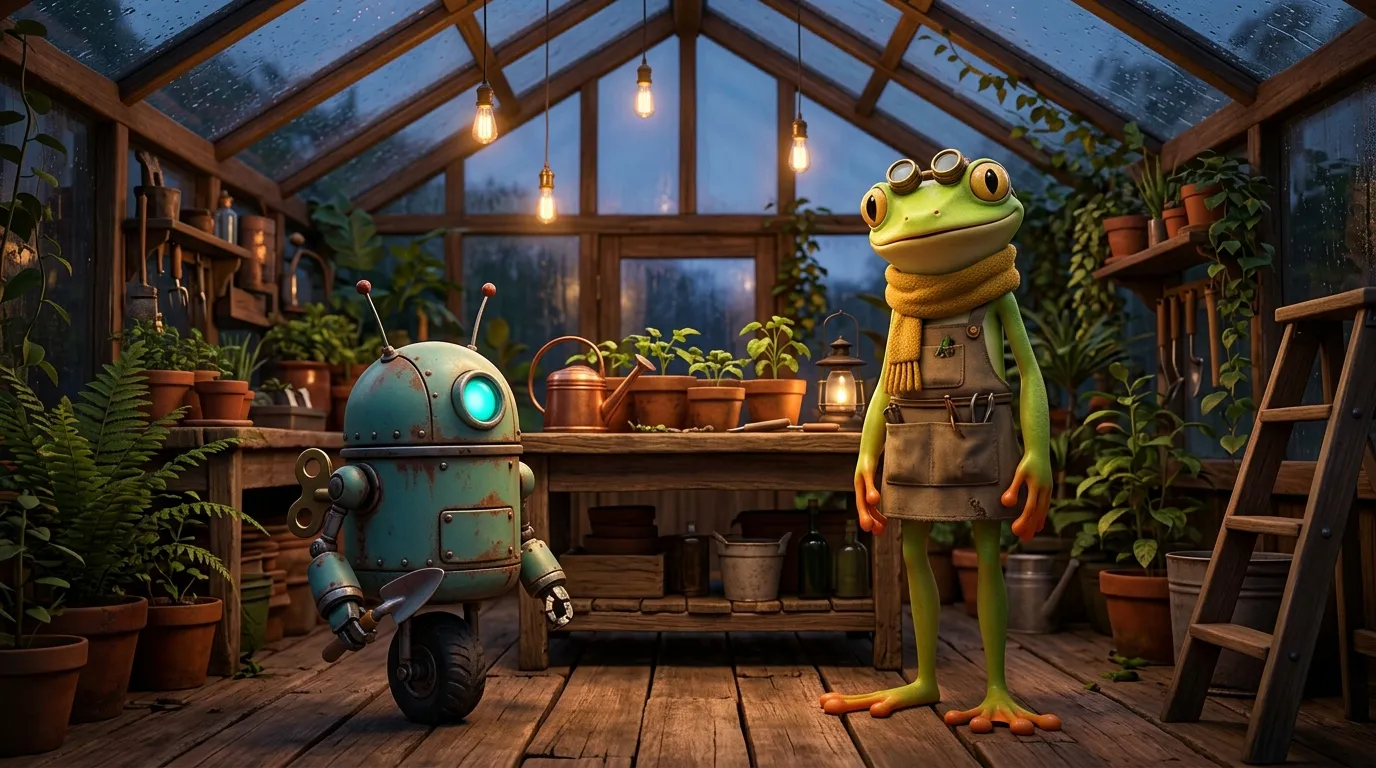
Audio policy (all shots): the two characters' spoken lines, the marked sound effects and steady rain on the glass roof, plus the one light music theme marked below. No subtitles. A continuous comedy scene in one location, a rainy greenhouse workshop at dusk, in eight shots, 3D animated feature-film style. @Image 1 is the character-and-location sheet: take the two characters' designs and the greenhouse workshop from it, and take nothing else from it. On the left of @Image 1, Bolt: a small round teal tin robot with one large round cyan eye-lens, two thin antennae with red bulb tips, stubby clamp hands, rolling on a single black rubber wheel. On the right of @Image 1, Fern: a tall slender lime-green tree frog standing upright, with big golden eyes, a mustard-yellow knitted scarf, a canvas work apron and brass goggles pushed up on her forehead. The workshop: a peaked glass roof, a long wooden workbench with a row of seedlings in clay pots, warm hanging bulbs, a wooden stepladder on the right, cool blue dusk light through the glass and warm amber light inside. Music: (a light, playful pizzicato strings theme, steady medium tempo, quiet under the voices, 0-30s). Shot 1, 0-3s: wide shot of the workshop, static camera. Fern, the tall green frog in the yellow scarf, stands at the workbench on the right, watering the seedlings. A drop of water falls from a crack in the glass roof onto a seedling. <rain patters on the glass roof> <a single drip taps a clay pot> Shot 2, 3-6s: medium close-up of Fern, slight low angle. She looks up at the roof, eyes wide, and calls out. Fern, the tall green frog (a warm, quick, mid-range female voice): "Bolt! The roof is leaking on my seedlings!" Shot 3, 6-10s: medium shot, the camera tracking left to right. Bolt, the small teal robot with the cyan eye, rolls in fast from the left carrying a dented tin bucket over his head and sets it under the drip. Bolt, the small teal robot (a bright, small, slightly tinny boyish voice): "Bucket deployed!" <wheel squeak> <a drip plinks into the metal bucket> Shot 4, 10-13s: the same medium shot continues without a cut: Bolt, beside the bucket, looks up as a second and then a third drip start falling beside the first onto the bench. <drips tapping wood> Shot 5, 13-17s: two-shot at bench height, Bolt on the left and Fern on the right. Bolt's eye-lens flicks between the three drips; he holds up his one bucket. Bolt, the small teal robot (a bright, small, slightly tinny boyish voice): "Three leaks. One bucket." Fern grabs a roll of silver tape from the bench. Shot 6, 17-20s: medium shot. Fern climbs the wooden stepladder on the right, tape in hand, while Bolt rolls over and grips the ladder's legs with both clamp hands. Fern, the tall green frog (a warm, quick, mid-range female voice): "Hold the ladder steady!" <ladder creaks> Shot 7, 20-25s: the ladder shot continues without a cut, then the camera tilts up to a low angle past Bolt's antennae. At the top of the ladder, Fern tears a strip of tape and presses it over the crack; the ladder wobbles and Bolt braces it, his wheel skidding. <tape tearing> <ladder rattles> Fern (warm female voice): "Got it!" Shot 8, 25-30s: close-up of Bolt, the small teal robot, looking up proudly. One last drop falls and lands right on his cyan eye-lens; his lens shutter blinks twice. Bolt, the small teal robot (a bright, small, slightly tinny boyish voice), deadpan: "Except this one." Fern, the frog above, laughs softly off-screen. <a drip taps metal> <soft rain continues> Keep the characters' designs, sizes and screen sides consistent in every shot: Bolt reaches about Fern's hip; Bolt on the left, Fern on the right unless a shot says otherwise. The light stays cool blue dusk outside and warm amber inside throughout. Sound: only the two voices, the marked effects, steady rain on the glass and the one pizzicato theme. No subtitles, no text or logos.
-
take the two characters' designs and the greenhouse workshop from it, and take nothing else from it
The one reference image gets a job and a limit.
-
Fern, the tall green frog in the yellow scarf
Every action names its subject by what it looks like, not only by name, so the model binds it to the right character.
-
the same medium shot continues without a cut
Where the camera does not cut is written too.
-
<a drip plinks into the metal bucket>
Each sound is tied to the thing that makes it on screen.
-
No subtitles, no text or logos.
Lettering is added in the edit, never by the model.
3. Bind every reference to a job
References are numbered within each type, in the order they are attached: @Image 1, @Image 2, @Audio 1,
@Video 1. Writing a handle does not attach anything, so check the actual list and update the prompt whenever the inputs
change. Then give each reference one job and say what it supplies:
- An image sets an identity, a current appearance, a place, a composition, a style or an opening pose. Say which qualities to keep and which the scene changes.
- An audio gives a speaker’s voice, an exact performance to follow, or music. Bind each speaking character to their own sample, and say to take the voice, not the old lines or the background.
- A video is a moment to continue, a movement or performance to follow, or footage to edit. Say which.
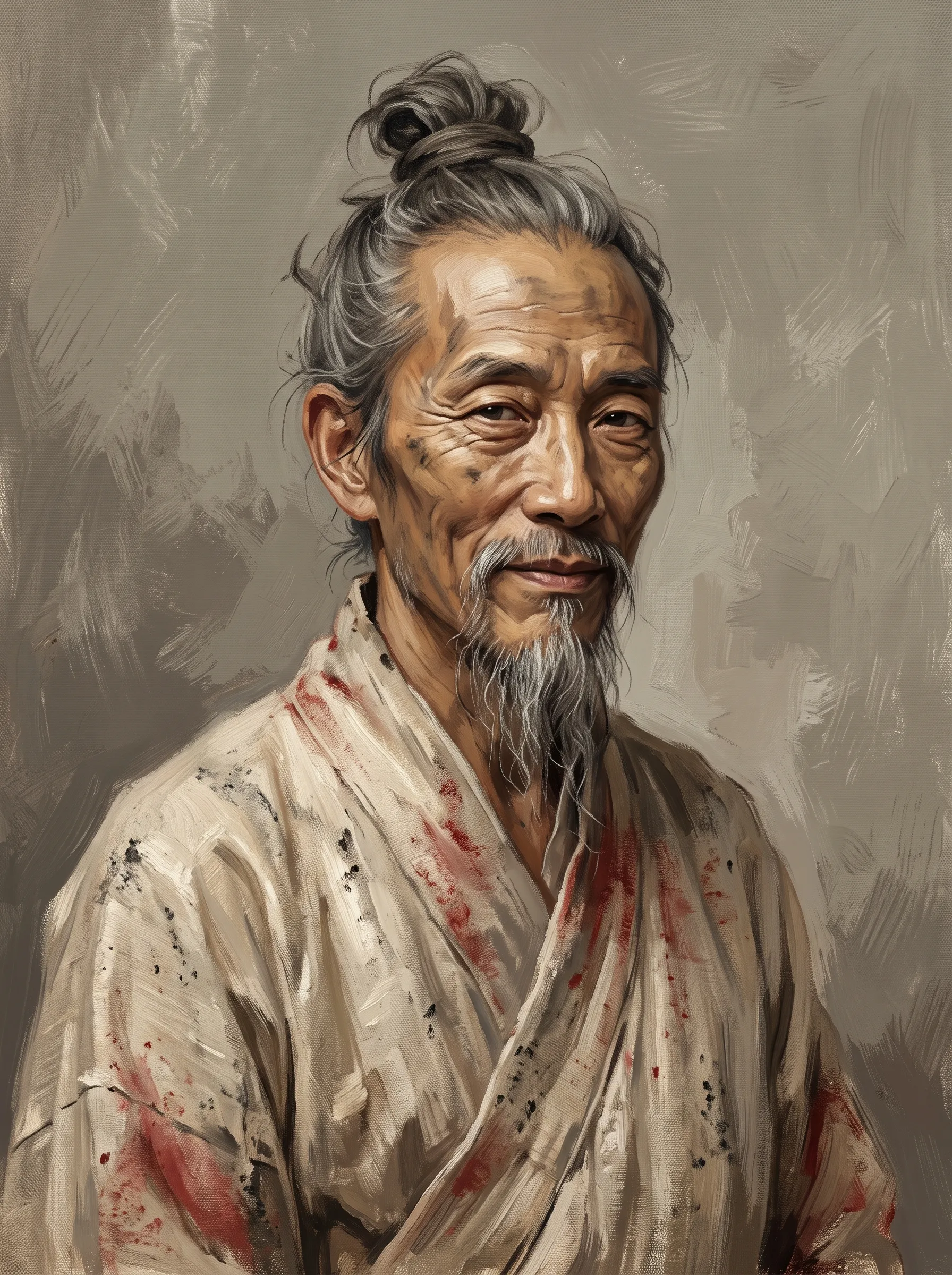
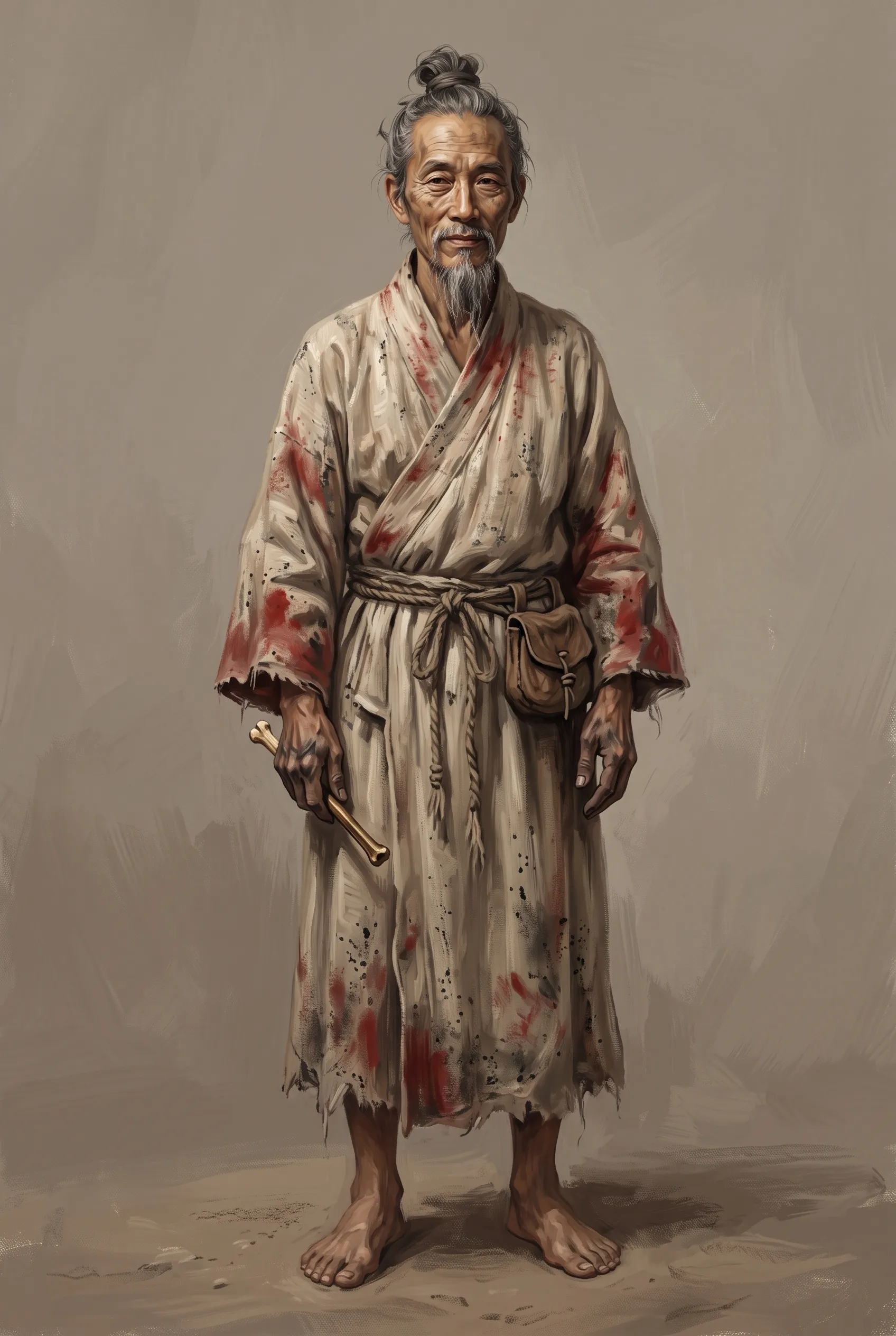
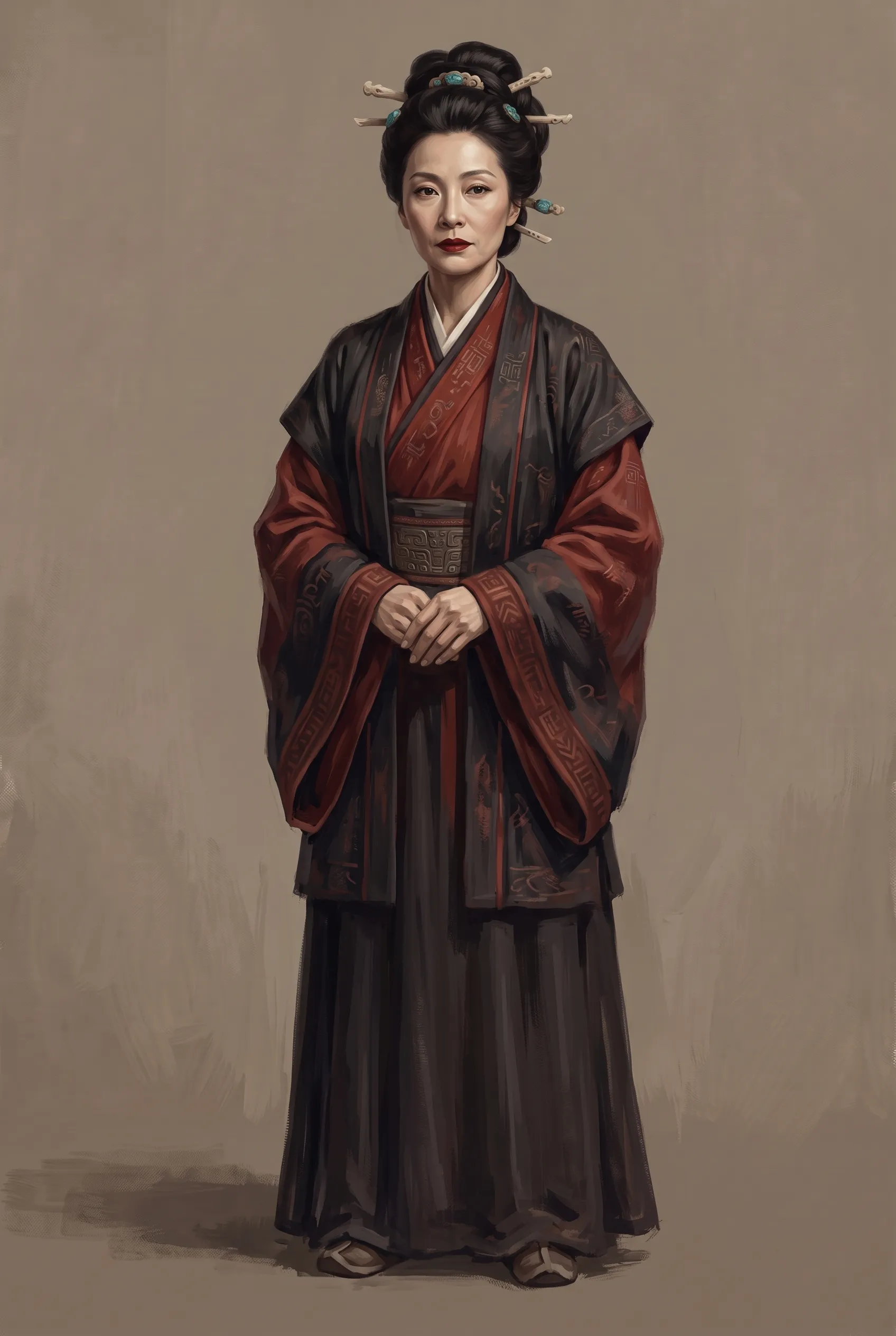
Bind actions and lines to a character’s visible description and position as well as their name: “the small teal robot carries the bucket”, not just “Bolt”. This court scene has five people and a place to keep straight, so the prompt binds seven images and two voice samples, each to one person. Point at a card to see where the prompt uses it.
The hall
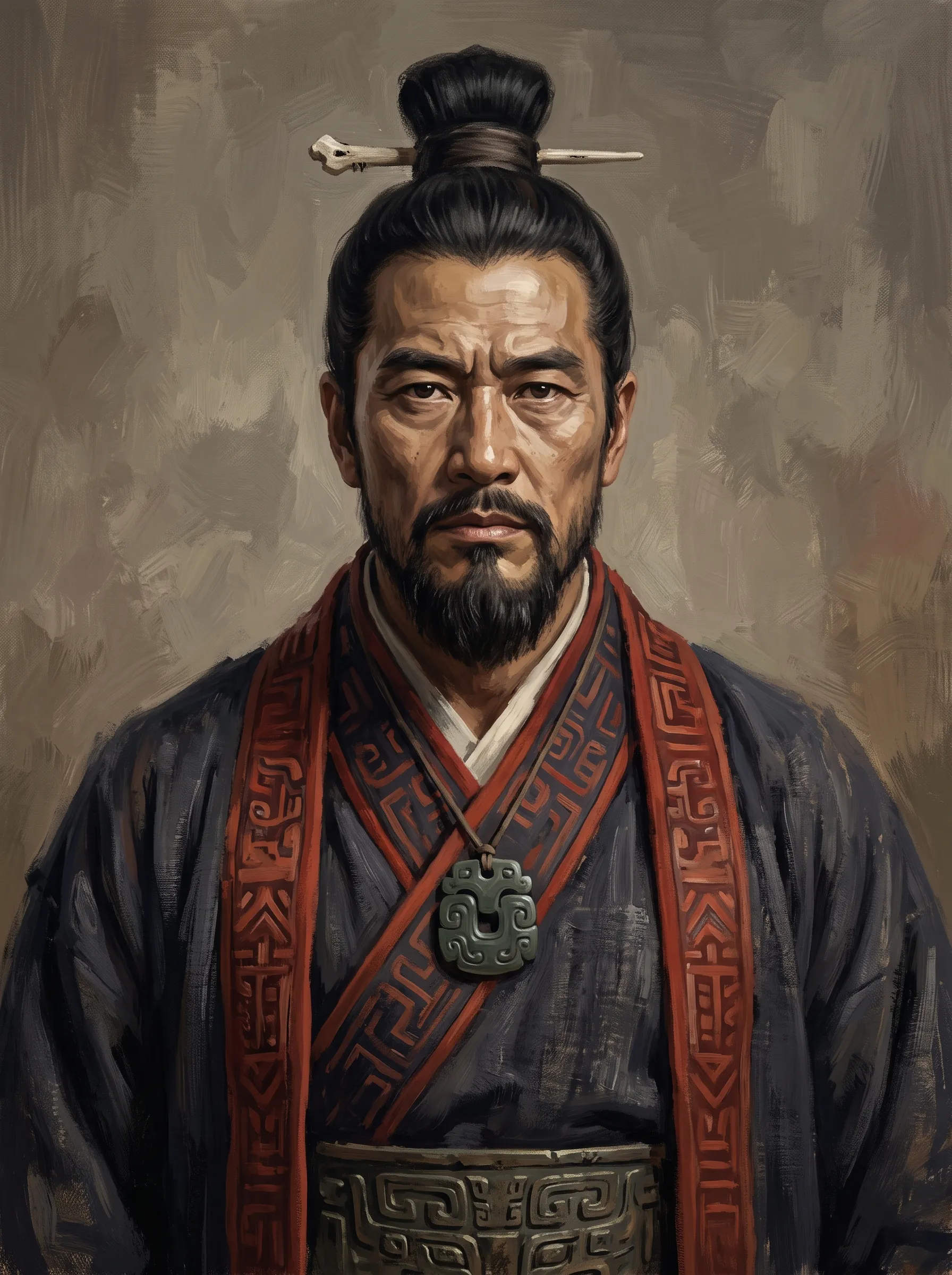
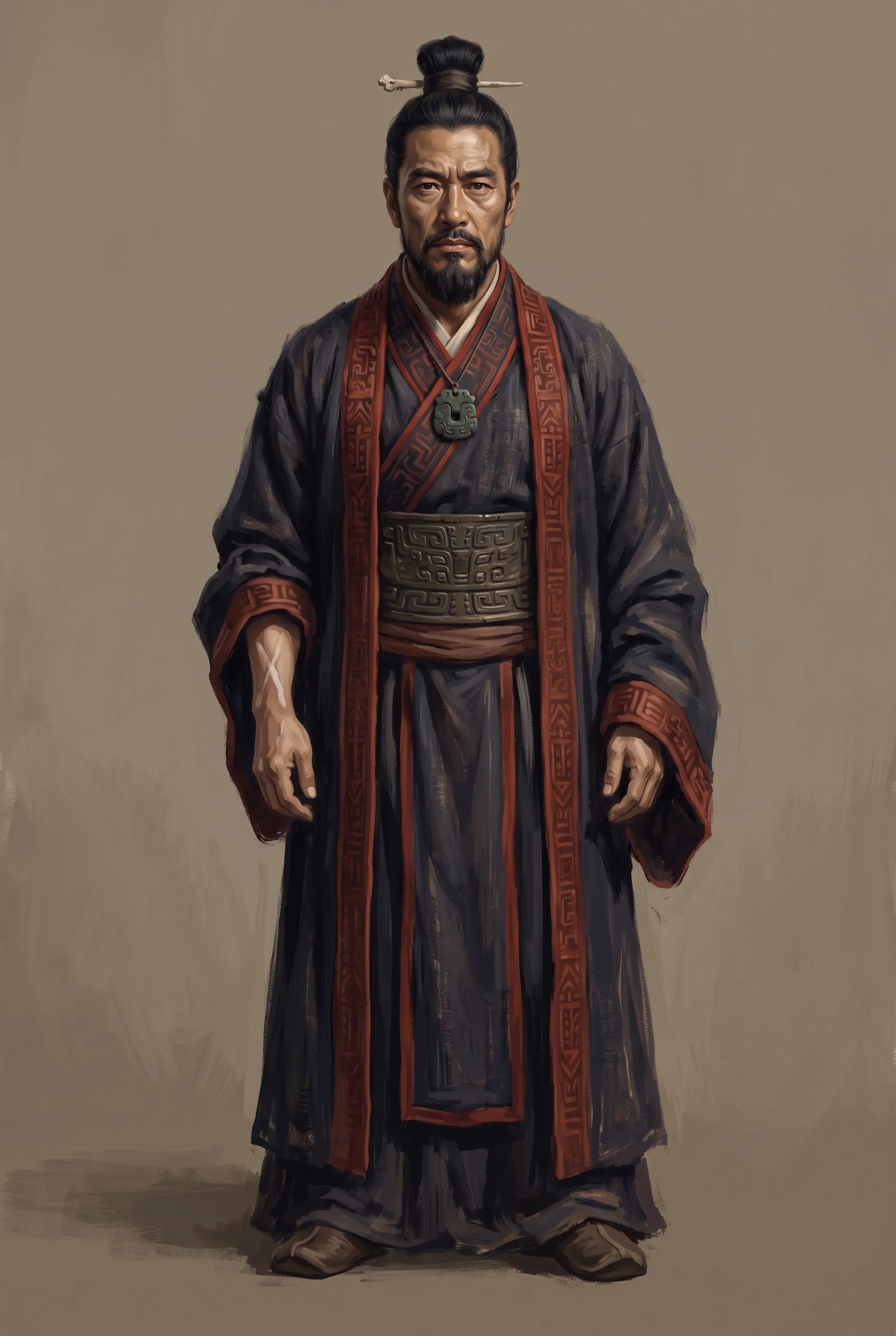
King Wu Ding
Que, the diviner
Lady Jing
Prince Ji
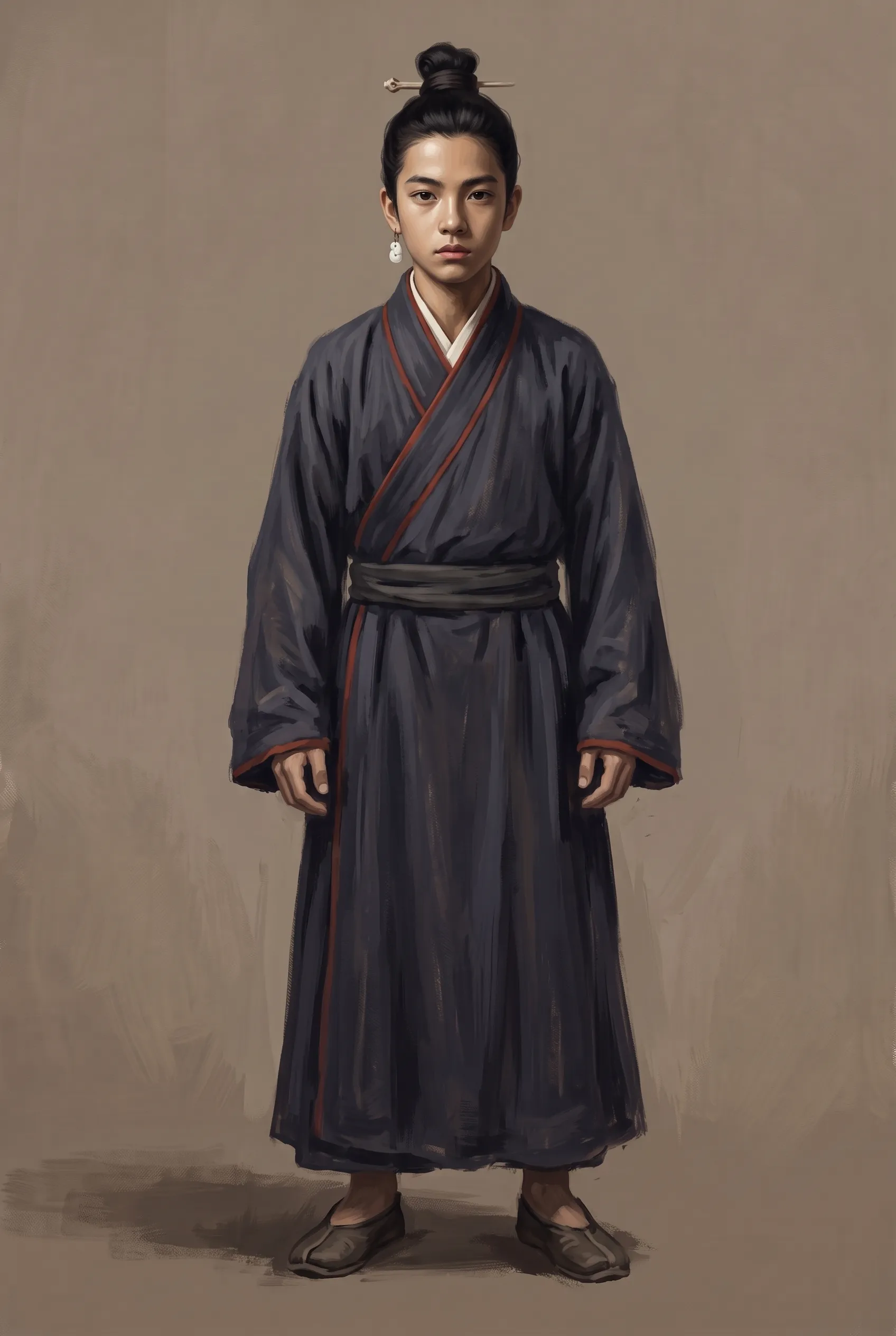
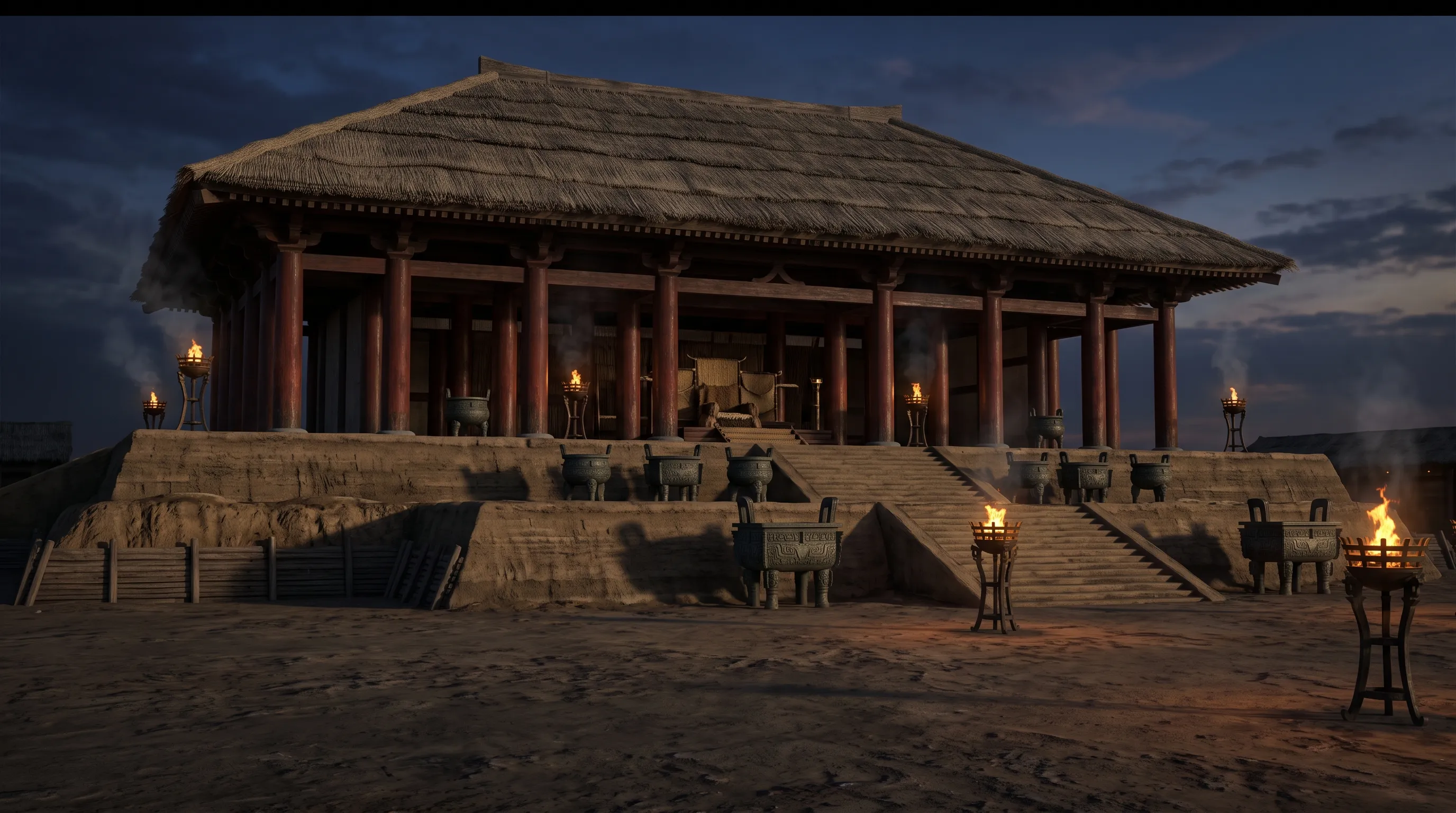
A 30-second scene at dusk in the Shang capital of Yin, about 1250 BCE, in a torchlit open-fronted thatched hall on a rammed-earth platform. Cinematic live-action historical drama, 35 mm anamorphic look, deep amber torchlight and blue dusk, ochre, indigo and charcoal tones with cinnabar-red accents. Use @Image 7 for the setting: the thatched hall, red wooden pillars, throne mat, bronze ding vessels and torch stands. Courtiers in muted hemp and indigo robes line the walls. Use @Image 1 and @Image 2 for KING WU DING: a tall broad-shouldered man of about forty, severe calm face, short square-cut black beard, dark indigo layered robe with cinnabar-red border, bronze belt plate, jade pendant, topknot with a bone hairpin, no crown. Use @Image 3 and @Image 4 for QUE: a narrow man of about fifty-five, thin grey topknot, long thin grey beard, undyed hemp robe with cinnabar stains on the sleeves. Use @Image 5 for LADY JING: an elegant woman of about forty, cinnabar-painted lips, hair in a high coil with bone and turquoise pins, layered black-and-red silk robe, still hands. Use @Image 6 for PRINCE JI: a slim serious boy of fifteen, indigo robe, topknot, a white jade ear ornament. Keep all faces and costumes exactly as in the references, as real people, not paintings. @Audio 1 is the King's deep, low, heavy voice: use it whenever the King speaks. @Audio 2 is Que's raspy, gentle, ironic older voice: use it whenever Que speaks. Take voice identity only, not the old lines or background sounds. Shot 1, 0-5s: Wide establishing view down the hall, slow push in. Torches flicker; courtiers line both walls in silence. King Wu Ding enters without a word from the far end and kneels on the throne mat. Lady Jing and Prince Ji stand beside the mat. The court goes quiet. Shot 2, 5-12s: Medium on Que kneeling before the king. Que offers a bronze rod with both hands and says, formally and clearly, "On Gway-sih day, Chweh divines: will the rain come within ten days?" Que bows his head. Shot 3, 12-20s: Over the King's shoulder: the king takes the rod and presses it himself into a drilled pit on a flat pale turtle plastron (the flat belly shell of a turtle, with a central seam, never a round or pearly shell) lying on a cloth. Slow macro on the shell. A thin curl of smoke. A sharp tick; a crack runs across the shell. Sound: tick, breath. Shot 4, 20-26s: Close on King Wu Ding's severe face, staring at the crack. A long pause; everyone waits. He says, low, slowly, in one clear word: "Rain." Shot 5, 26-30s: Slow wide of the court as it breathes out. Prince Ji smiles with relief; Lady Jing watches the king's face, not the shell. A single deep bronze bell sounds. Period guardrails: bronze, wood, bone, hemp and clay only; no iron, no modern objects, no tiled roofs, no stone walls, no visible writing. Only the two quoted lines, spoken by those speakers. No music. No subtitles, text or logos.
The two voice samples are clean excerpts of the King’s and Que’s voices from earlier scenes of the same production. A written voice description alone is weaker guidance; a short sample with one speaker, complete words and little background carries the voice from scene to scene.
4. Start from an exact frame
When the opening composition matters exactly, give the image as the first frame, not as a reference. Calling a reference image “the first frame” in the prose only asks for a similar opening. A first frame carries pose and placement, but no motion, voice or ambience, and it cannot be combined with reference images in the same request (BytePlus’s video API reference).

first frame Seedance
Shot 1, 0-3s: start exactly on the opening frame; a very slow push-in toward the black ceramic cup as the backlit steam curls and swirls in graceful spirals in the sunbeam.
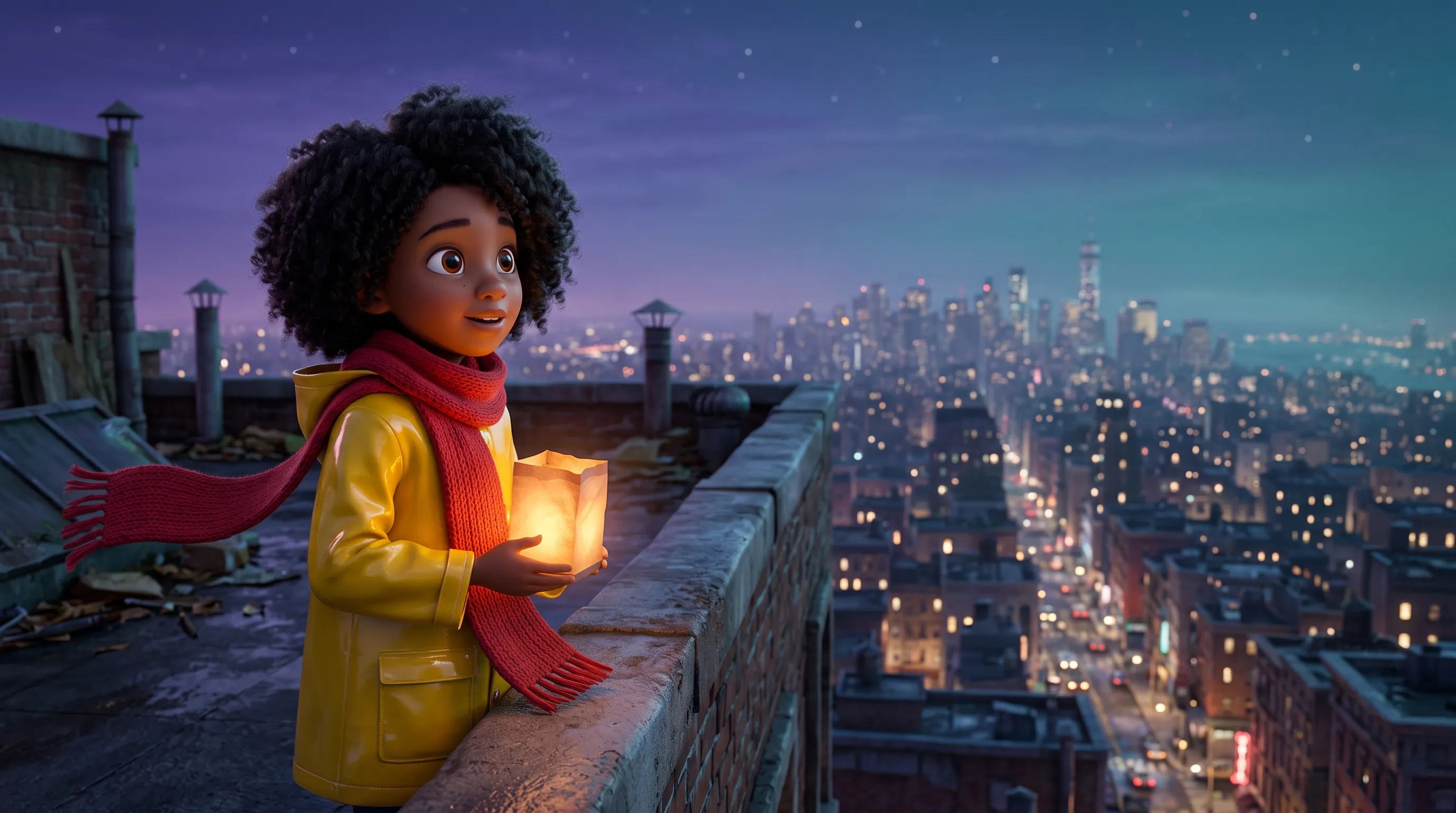
first frame Seedance
Shot 1, 0-4s: medium shot from the opening frame; the wind lifts her red scarf, she smiles with wonder, raises the glowing lantern in both hands and gently lets it go; it floats up past her face, warm light sweeping across her cheeks.
5. Continue a scene without a seam
When a scene runs past one generation, first choose the last moment that stays in the edit, then decide how the next request uses the footage before it. Use the accepted footage itself, not another description of it:
| What you want | How to ask | What the prompt says |
|---|---|---|
| Continue the same action | Extend mode, with the last seconds you kept as @Video 1 |
Continue from the end of @Video 1: the new action and cuts, keeping positions, movement, light and sound |
| Continue from an exact pose | The last kept frame as the first frame | Start from this frame and direct what happens next |
| A new scene with an earlier look or movement | Reference mode, with the useful passage as @Video 1 |
Which qualities @Video 1 gives, and what the new scene is |
| Change an existing clip | Edit mode, with the whole passage to change | The precise change, and the action, timing, people and sound to keep |
To extend, cut the final seconds of the kept passage and check its last frames first: a cut or an unwanted close-up at its end will steer the continuation. Then inspect both sides of every join, at normal speed and closely: a replayed moment, a jump in identity or position, lost momentum, a change of light or a sound that restarts.
This join is from a production that asked to “continue the scene of @Video 1 without a visible cut”. The request
attached the last eight seconds of the previous clip as @Video 1, but without choosing extend mode, and the
continuation opens on a new camera setup. The check takes ten seconds and catches it before the edit does:
Last frame of @Video 1
First frame of the continuation
The join
6. Direct the sound with the picture
Keep native audio on when dialogue, ambience or effects belong to the scene. Describe the ambience as the continuing sound of the place (rain on glass, room tone) and keep it the same across cuts that stay there. Attach each effect to its visible cause, then check its sync: the action may land at a different second than you asked. For music that must stay continuous across a production, generate the score separately and ask Seedance for voices, ambience and effects without music. The music and sound design guide covers that score.
Seedance 2.5’s native dialogue covers eleven languages: Chinese, English, Spanish, Indonesian, Malay, Thai, Arabic, Portuguese, Vietnamese, Japanese and Korean (BytePlus’s Seedance 2.5 tutorial). Bald Rhino’s agent uses it for English and Chinese dialogue; for other languages, and wherever the wording must be exact, it prepares the speech first with a voice model and uses it as the speaker’s audio reference. Either way, listen to every line for wrong words, pronunciation, the wrong speaker or missing phrases. A good first clip does not clear the later ones.
7. Watch the whole scene, then repair at the cause
Watch the full action and listen to the full sound before judging a detail. Check that each reference kept its identity, each line came from the right speaker, the important actions happened, the joins hold, and no subtitles or music crept in. Keep shots that serve the scene even if the model changed a framing that did not matter. When something essential is wrong (a missing exit, swapped characters, a payoff that never comes), fix its cause: the reference mapping, crowded staging, an action the prompt left out, or the edit itself. Then review the joins on both sides of the repair.